
Some Images from ‘R.U.R.’
A 1923 Čapekian performance


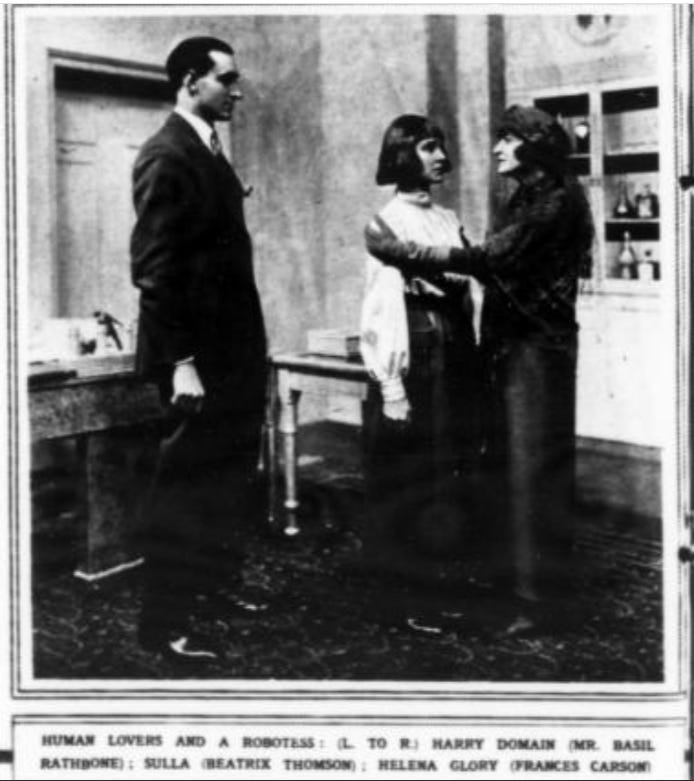
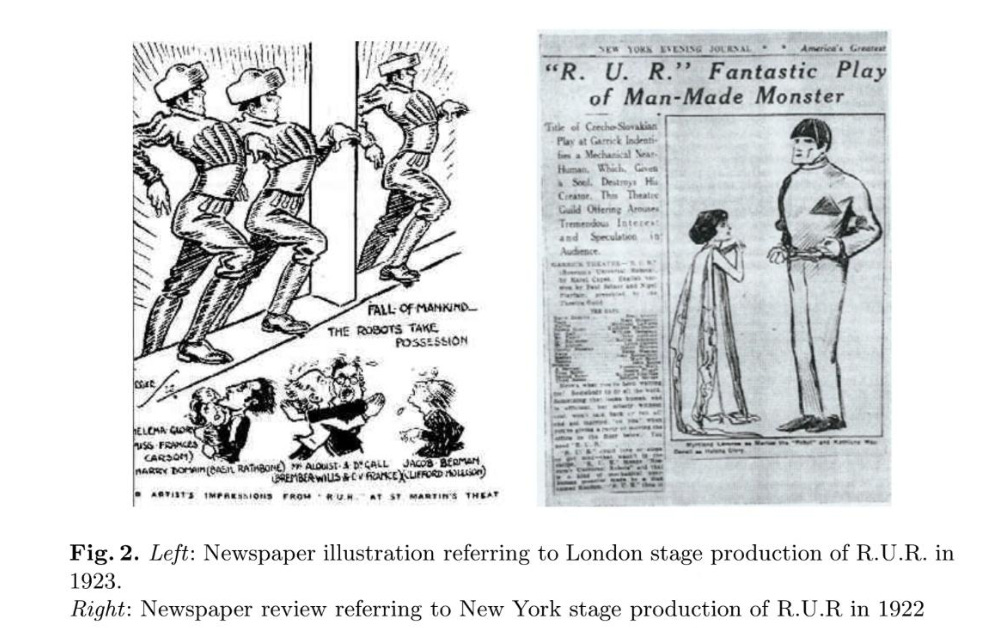
I came across these in an old 1923 issue of the Illustrated London News, pictures from Nigel Playfair’s first English-language production of Karel Čapek’s R.U.R. (first staged in Czech in 1920). Paul Selver had translated the original into English in 1921, and Playfair adapted, and to some extent rewrote, this version for the St Martin's Theatre in London in 1923.1
I don’t know if these images are widely known: I have seen a couple of photos and illustrations of this particular production—identifiable by the distinctive costumes of the robots2—but I hadn’t seen these specific images before.
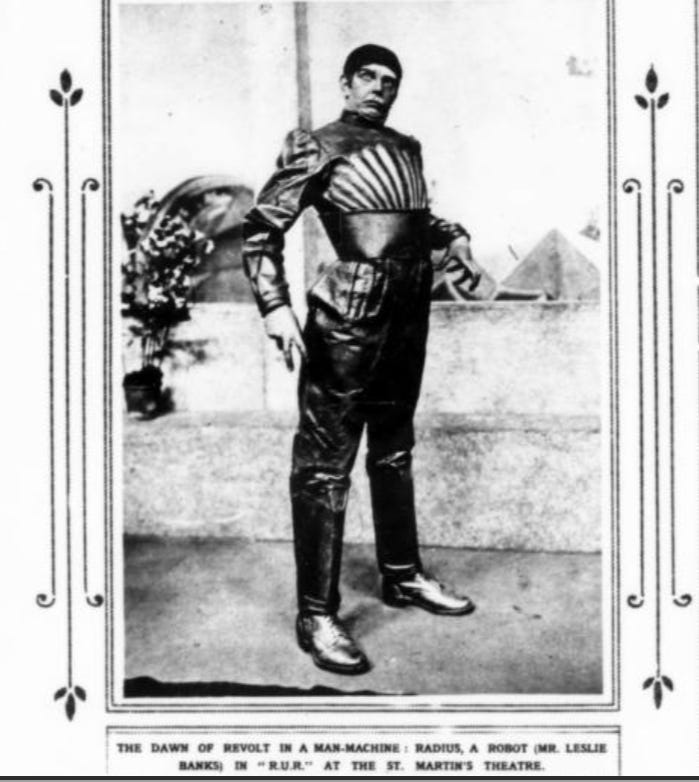
Leslie Banks, there: he also played the Chorus in Olivier’s film of Henry V.
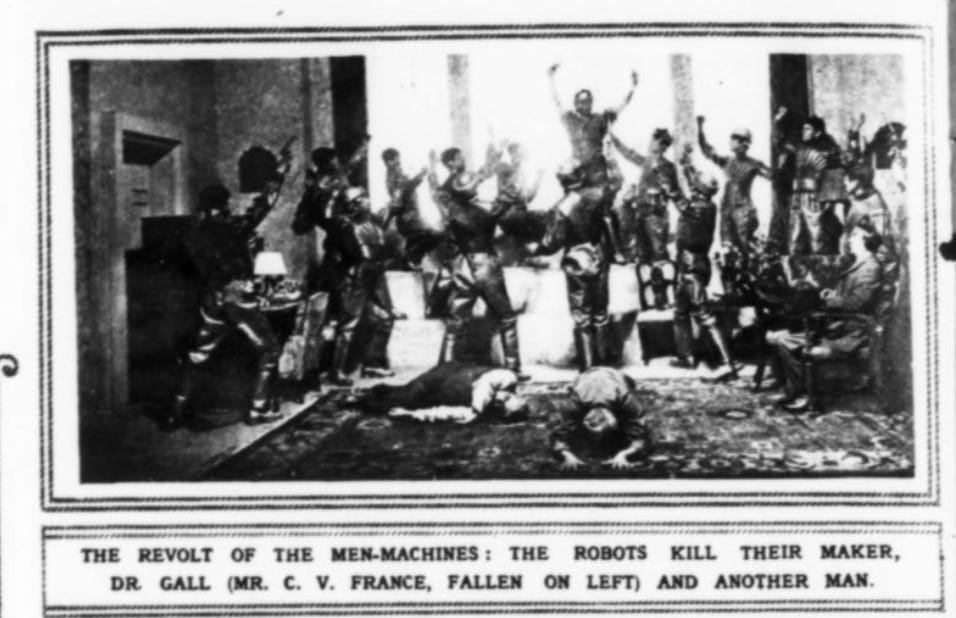
C V France later played Mr Ashton, the vicar Went the Day Well? (1942).
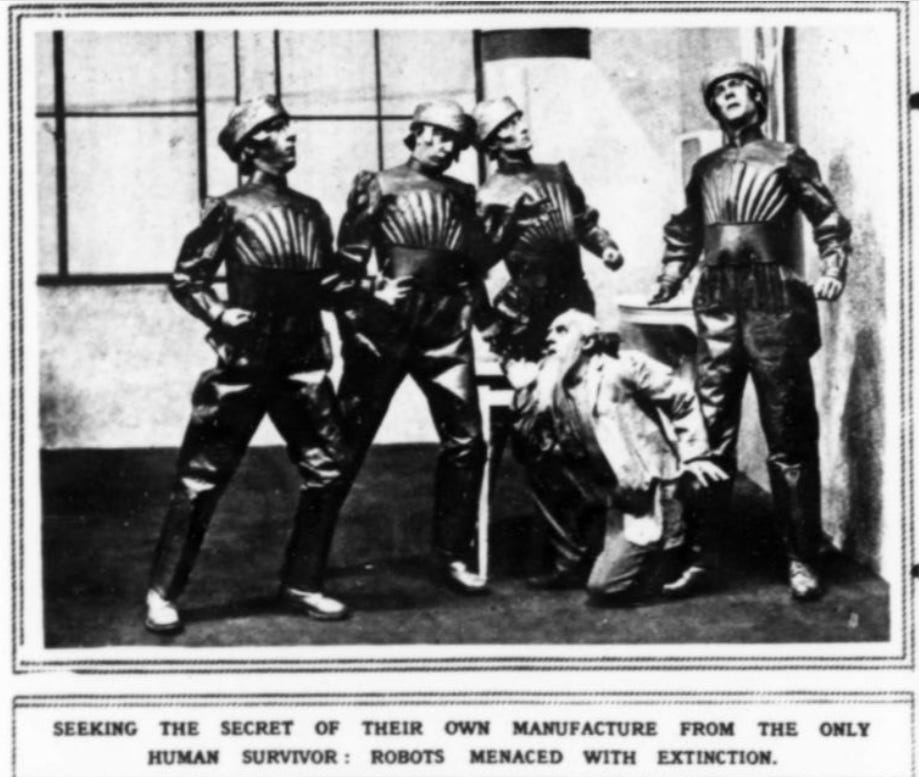
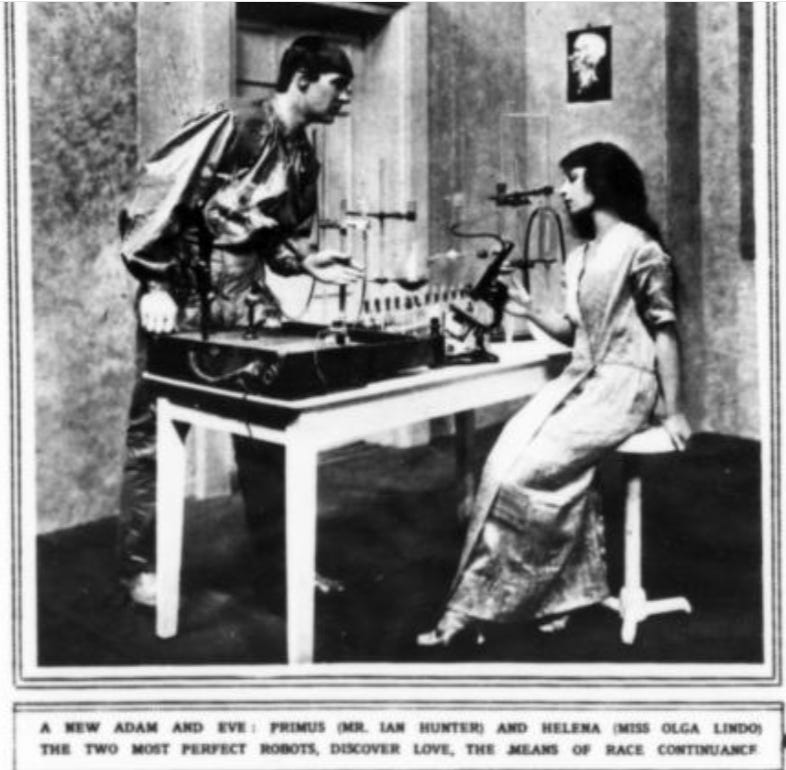
And here, in an early role, Mr Sherlock Holmes himself—Basil Rathbone:
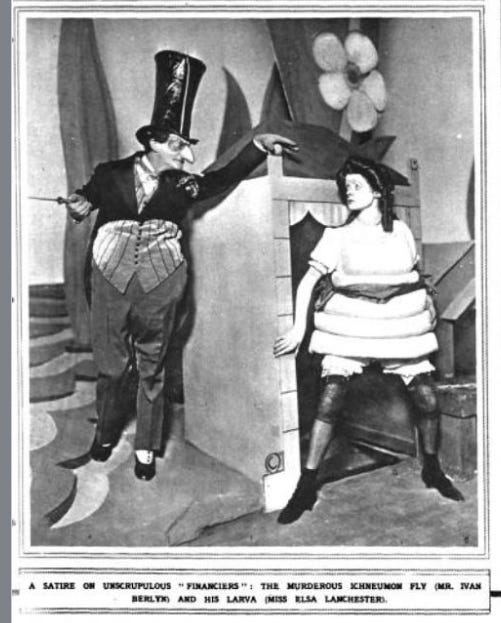
On the same bill was Playfair’s other Čapek performance, this one adapted for the stage in collaboration with Clifford Bax: The Insect Play. The anti-Semitism of this staging is lamentably unmissable.
Of R.U.R., I have written on this very substack:
Čapek’s robots are made not from metal but ‘protoplasm’, they are grown, they are replicantesque; cleverer and stronger than human beings though limited in areas of emotion, empathy and spirit. … Čapek’s play (produced a mere four years after the Russian revolution) is about work, about slavery and oppression. Domin, the managing director of the titular factory, ‘Rossum's Universal Robots’, creates a female robot Helena, who works as his secretary, and whom he pressures into marrying him. But Helena, having access to Domin’s materials, destroys Rossum’s formula required to create robots. Later, in the robot uprising, all the humans are killed, except for Alquist, the Clerk of the Works—that is, the Head of Construction—who is spared because the robots consider him a fellow: ‘he works with his hands like a robot. He builds houses. He can work.’
There’s a lot more at the end of that link, not least on the relationship between robots and orphans.3
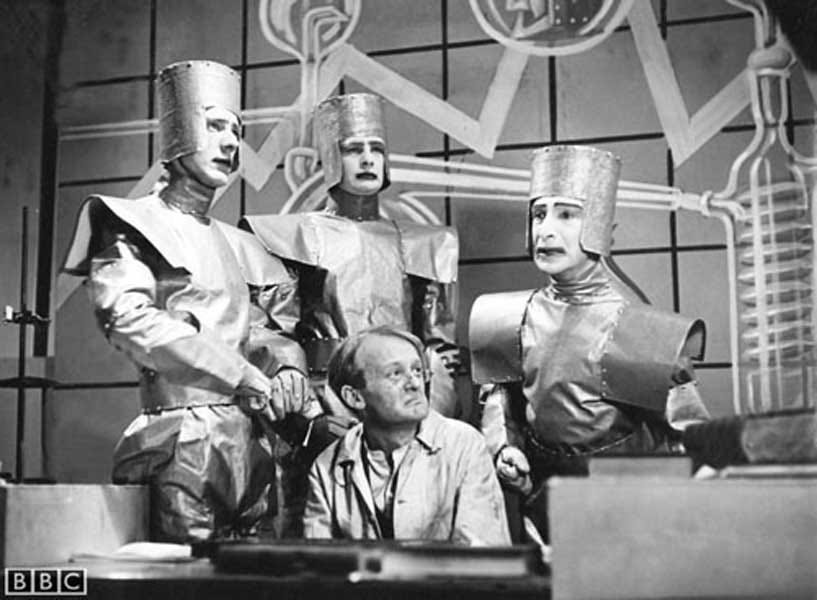
There were a couple of other (amateur) productions of the play in the UK in the 1920s: the Settlement Community Players staged it in York in 1925, and the Newcastle People’s Theatre put it on in 1926. Then in 1938 the BBC broadcast a production: the first science fiction on television, no less. Here’s a screenshot of that:
For instance:
The Czech word robota means ‘serfdom, villeinage, corvee’ and came to be used for any arduous work or drudgery. ‘Robot’ is Čapek’s back-formation from this term. There are versions of the word robota, meaning work, in other European languages: Arbeit in German, arbeid in Dutch, arbejde in Danish (the Middle English word arveð is a cognate) and that’s because they all derive from a now-lost common etymological ancestor: *orbъ (“slave”), which itself is derived from the Proto-Indo-European word *h₃erbʰ, “to change or lose status”. This speaks to a world in which not only was work what slaves did, anybody might become a slave if their status was overturned or degraded, as for instance when a man or woman was captured in war, or a child was orphaned. Indeed, *orbъ is the root, via the Greek ορφανός, of the English word “orphan”.
To be clear, it may be that these photos are already well known to historians of science fiction, and of the theatre. But I've done a lot of work on these things and had never seen them before, and Google doesn't bring them up. So I thought it worth posting them.
Very cool.