
Trench or Fake?
Sketch or sketchy

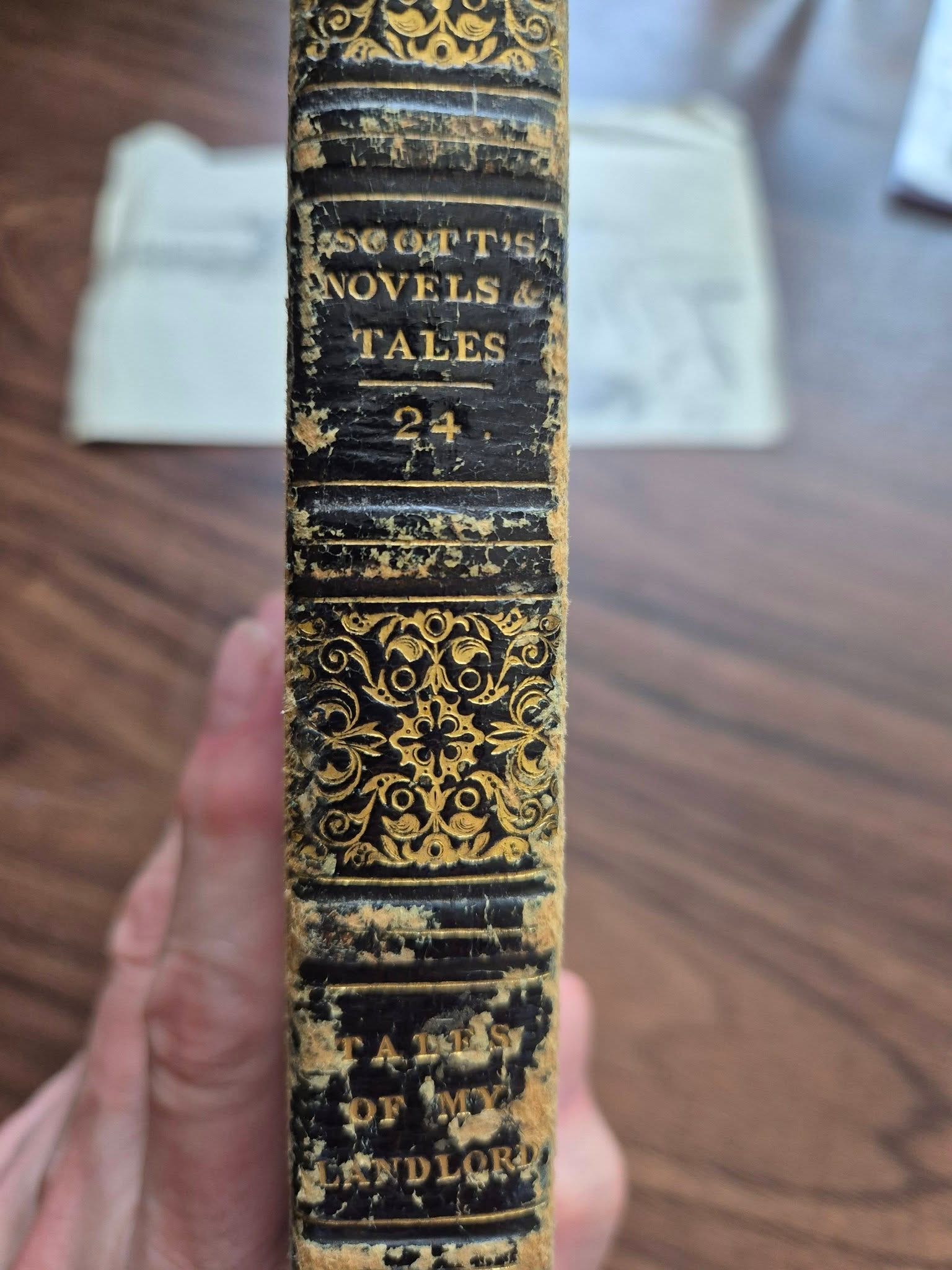
I was browsing eBay for old copies of Walter Scott, like any normal person does, when I came across a curio: a seller was offering a 1821 edition of A Legend of Montrose (1819). It’s an odd volume, not in particularly good condition, but it was only £5. I have most of the 1830-32 ‘Magnum Opus’ first collected edition of Scott, as you can see here, in their pale brown glory:
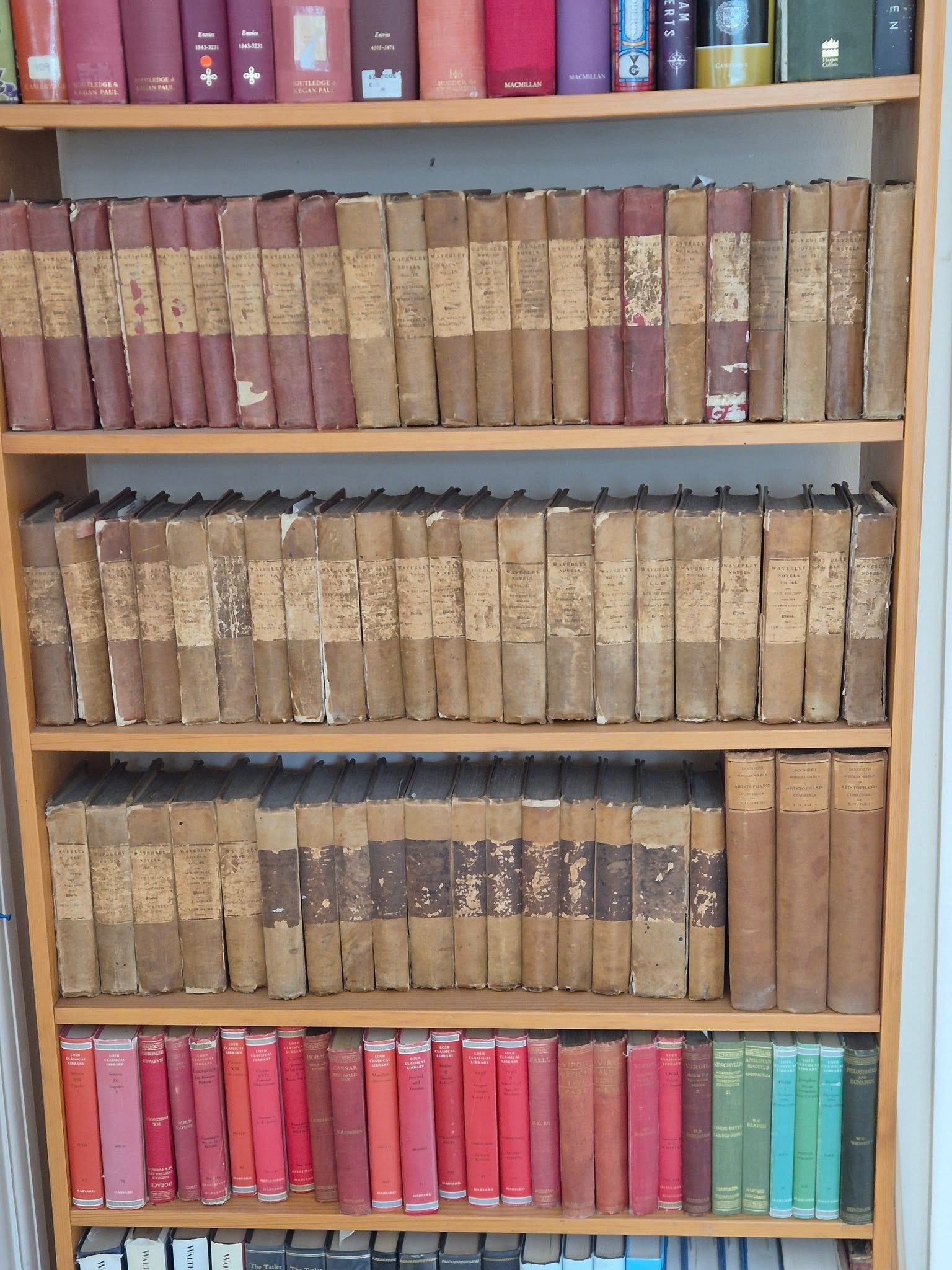
The ones with the darker rectangles on the spine are Scott’s poems; the rest are the Waverley novels, from, as you can see, various provenances.1 Most are quite tatty, which I don’t mind, since I use them as reading editions. I’m always looking for the vols I don’t have in that set, which is why I was scrolling online. I also have a few odd other early editions, and this Montrose was so cheap I bought it. The thing is, it advertised itself as an old Scott volume that came with a sketch of ‘No Man’s Land’ made by a soldier on the Western Front in 1918. ‘Evidently the book was one he had taken with him to war’ said the eBay listing. From this I assumed the sketch was on one of the book’s flyleaves.
So I bought it. It came like this:
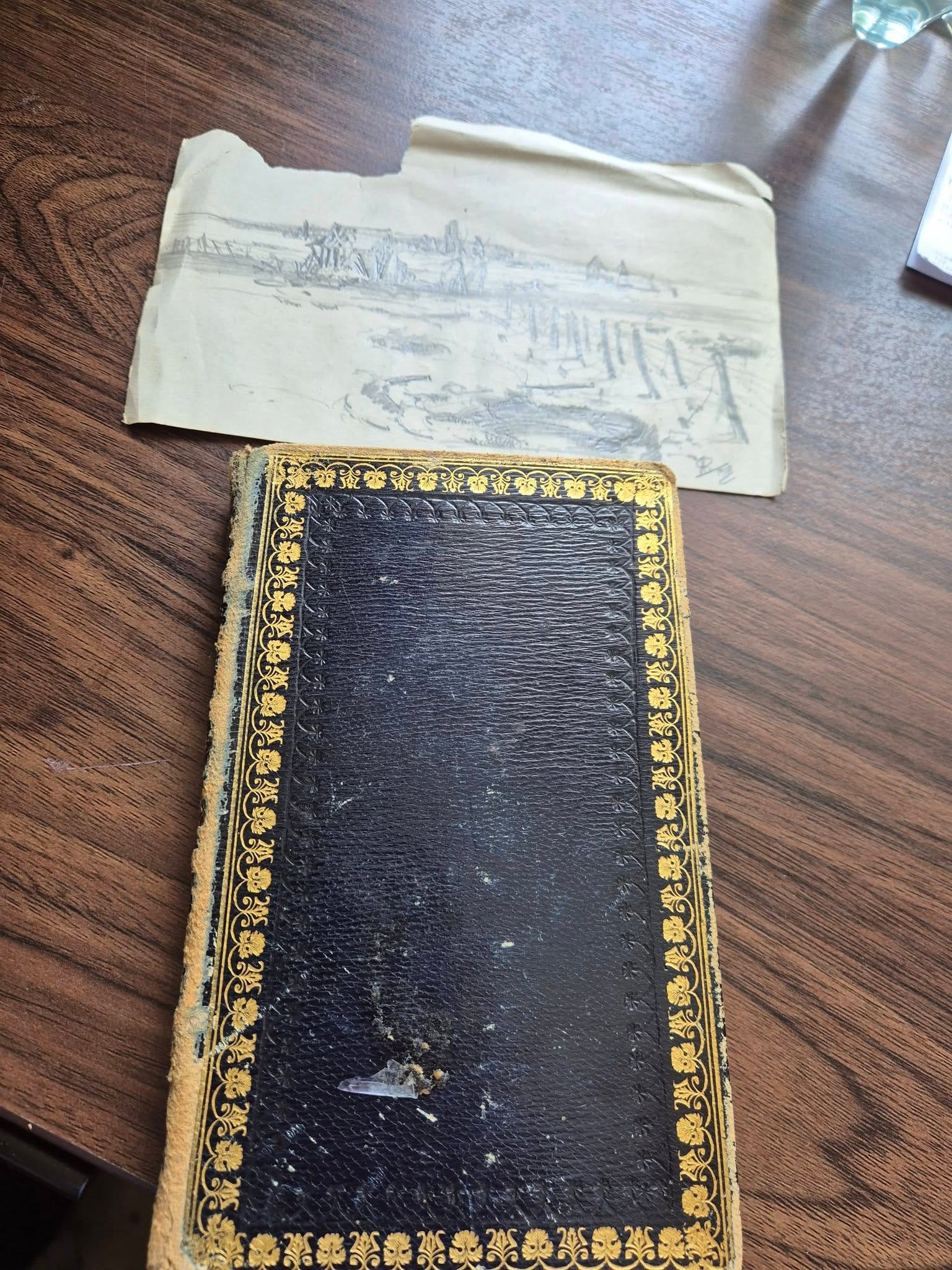
The book is a genuine 1821 edition of A Legend of Montrose and, though an odd volume, worth more than £5 on its own, so I’m very happy with my purchase.
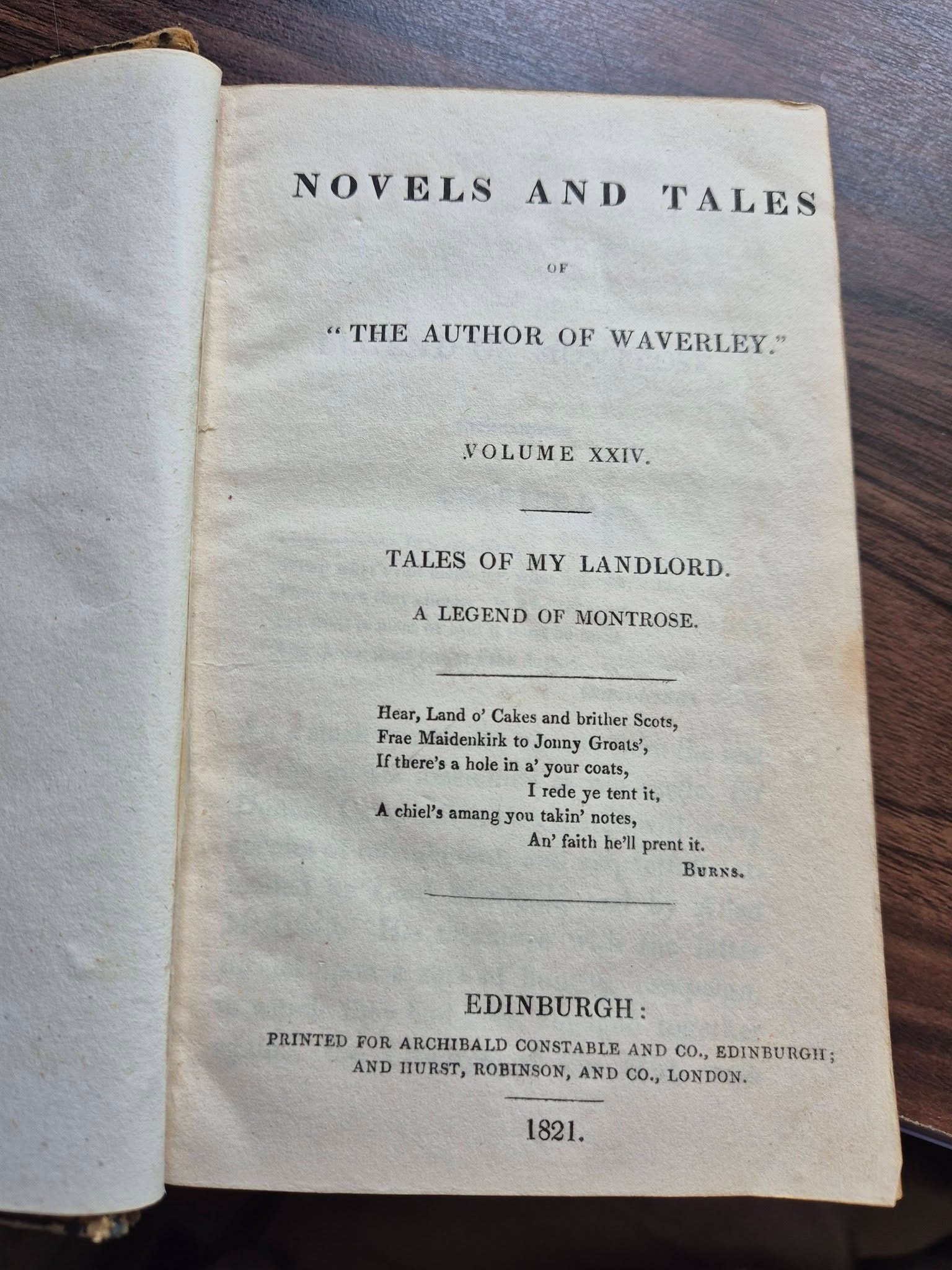
The sketch, though, is an oddity. It’s on a piece of paper clearly torn from a book, but not from this book, since it’s larger than it by quite a lot. It hasn’t been folded or tucked-in, and came in a separate package. Its connection to the Scott volume seems tenuous.
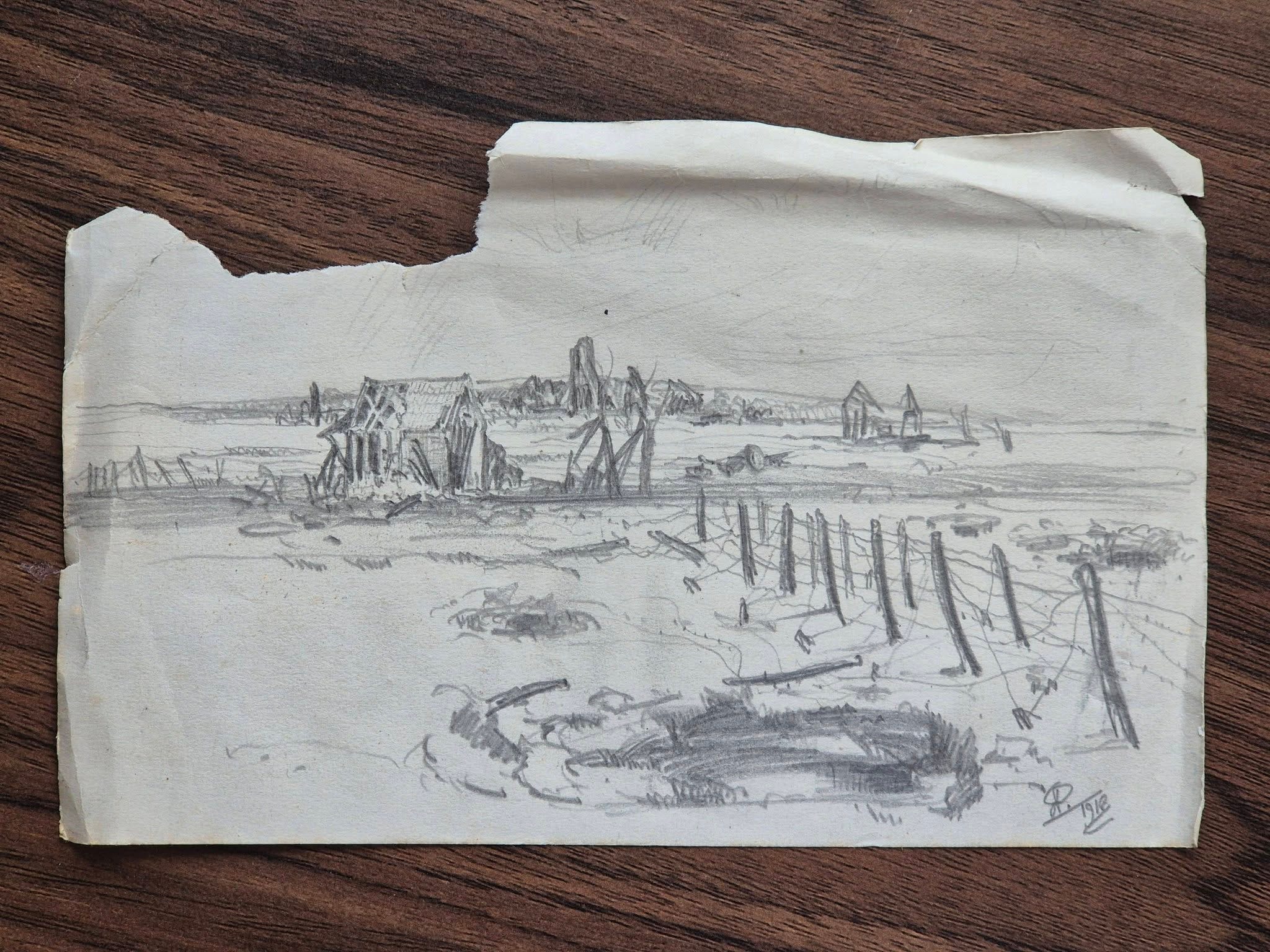
Is it a fake? I’m not sure how I’d find out. It would be easy enough to rip a flyleaf from an old book, draw upon it a pencil sketch of a photo of the Western Front, and try to pass it off as something a soldier had done.2 But if you were to this, wouldn’t you try and sell it for more than a fiver? It seems an elaborate and rather strange con-job, if so. Or perhaps it is genuine, in which case it must date from before August 1918, when the Hundred Days Offensive broke through the German lines, the war became mobile and ‘No Man’s Land’ a thing of the past. But I suppose that’s possible. And indeed the relative elevation of the point-of-view might support this dating: it was obviously not drawn by someone hunkering down in a trench, but someone standing up, as might be the case if the Germans had been pushed back.
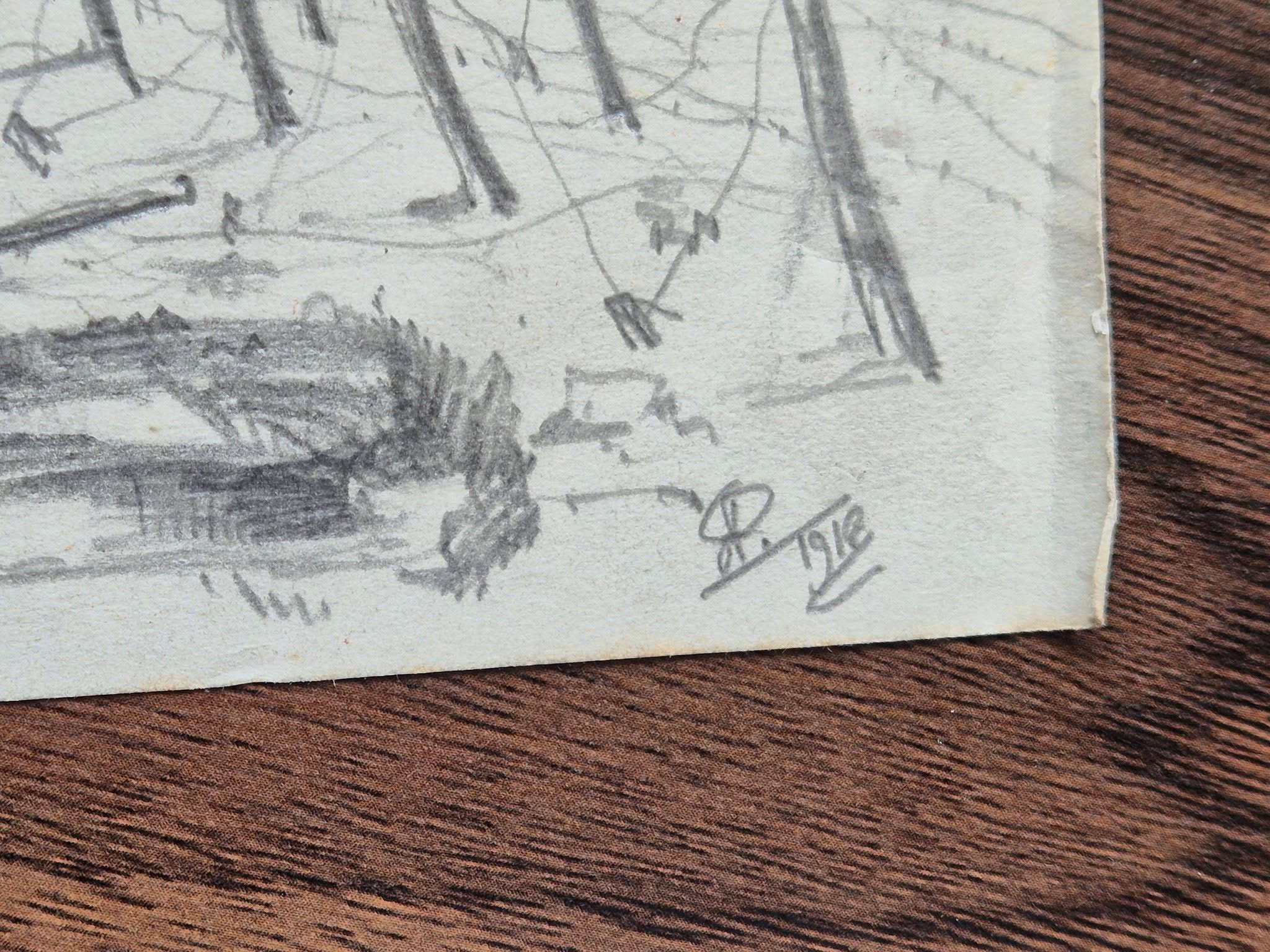
Is that “SP”? “GP”?
To be clear, I wouldn’t in the least be irked if it were proved a fake: it’s no Paul Nash, but it’s a nice enough sketch, in its way, and it was cheap as chips. And if it’s real that’s interesting.
What do you think?
The random Loebs are a distraction, I know. On the bottom shelf I have a number of the modern Edinburgh Editions of Scott, which are excellent (I’d have more if they weren’t so expensive) but they’re too big to fit in the shelf immediately below the Magnum Opus Scotts. For some reason my bookcase is comprised of regular-sized shelves and one mini-shelf. This latter just about fits the Loeb format, so I’ve parked some of them there: I have many others elsewhere.
I wonder if a reverse google image search would bring up a photo upon which a forger might base their sketch. But even if it did that might not prove deceit. There are lots of photos of the Western Front, but there were also lots of soldiers stationed there who might have seen what the photos show with their own eyes.
Interesting find. I too seek out old books, say books published at the turn of the 20th century, plus or minus fifty years. In my old age, I see evidence of the past being erased. Sure, time will do that, but not on the scale and pace that it now seems to be happening. I, like some others, believe nefarious forces are diligently doing this. How? When it's digitized, it can easily be manipulated and changed. Why? You have to burn down the old to build the new. What? The brave new world.
Yeah, I'm paranoid. But it has served me well.
Anyway, enjoy your new addition to your library.
Looks legit to me. The signature/sigil may be known to a UK art expert.