
A Dream
What is the status of a memory of a memory?

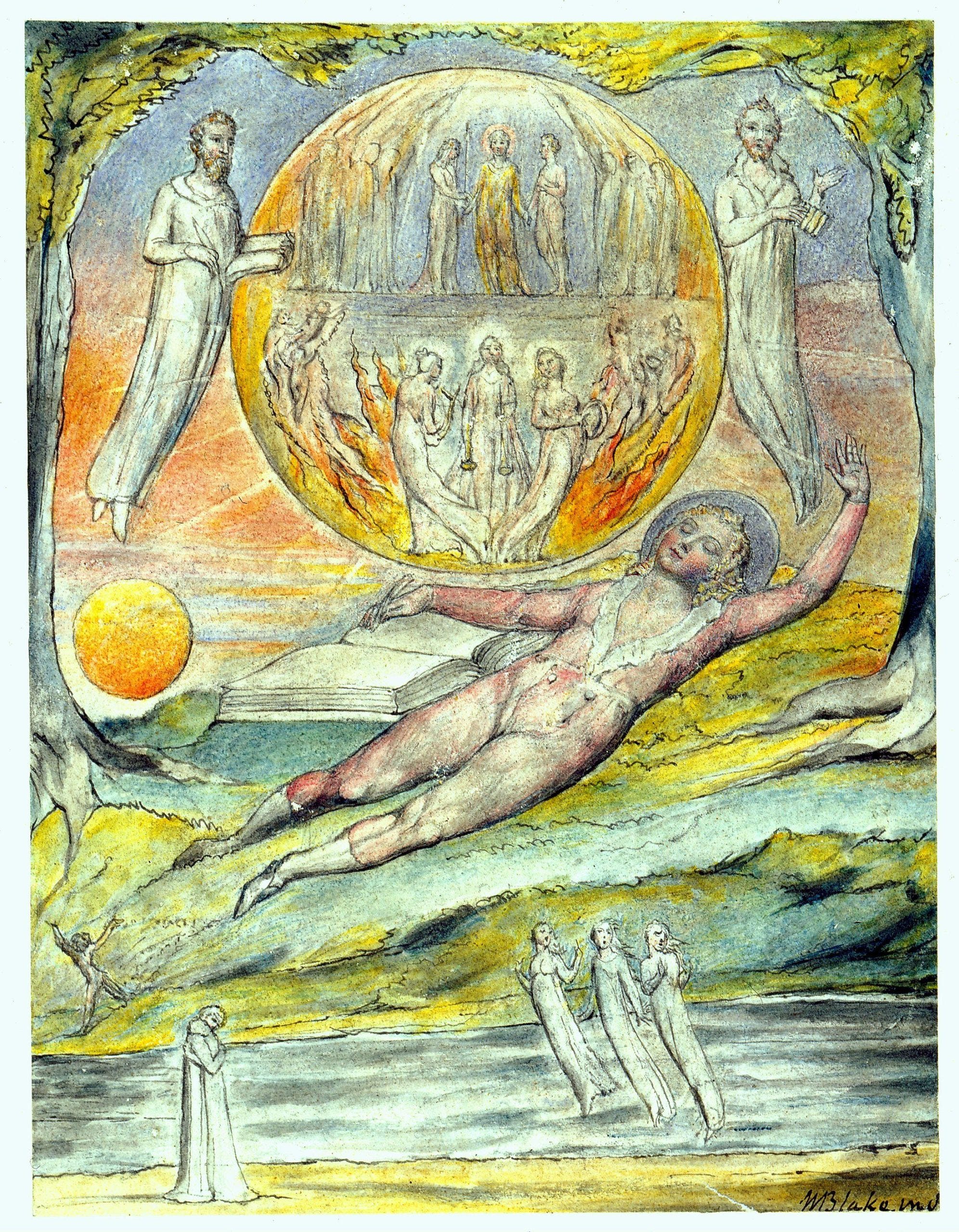
It’s famously trying, having to listen to people tell you their dreams, so I apologise in advance. But the point of this post is less the dream itself, and more the process by which I have remembered it.
First the dream itself. One Saturday, my wife, Rachel, had to get up early for a thing, and so set a cruelly dawn-timed weekend alarm. The electronic bleeping of this woke me in the middle of a particular dream.
In my dream I was in a sound studio, producing a novelty single, George-Martin-style (as George Martin himself did, before he got together with the Beatles). The performers were a bearded man — I didn’t recognise him, but in the dream I knew he was a very popular actor, a TV personality — and a little kid. The conceit of the song was that their house had been turned upside down and the kid wanted to know why. It started
Daddy hired a piccolo
See him arrive
Playing on his piccolo from nine to five
At this the kid piped up, as if whispering in the man’s ear: ‘but was he the one who left the house in such a mess?’ And the man said. ‘No not at all: he sounded like this.’ Then there was a jaunty little piccolo tune and the two did a little dance together. The song went on in that fashion.
Daddy hired a flute player
See him arrive
Playing on his silver flute from nine to five
And so on: the flute adding to the piccolo. Then: guitar. Violin. It ended with
Daddy hired a double bass
See where he comes
He is a man with — BIG THUMBS!
— then the alarm went off and I woke up. I assume at this point the double bass would have started playing and everything in the house would have started leaping around in resonance and crashing onto the floor. But I didn’t get to that part. Immediately after I woke I could remember the tune, but then, as I wrote out my account, on the morning of awakening, the music had already vanished from my mind.
Advice I give my Creative Writing students, and which I follow myself, is: if you wake up in the night from a dream with a really good writing idea (not that this dream is one such, but just to say) you must jot it down immediately. It’s no good saying to yourself: oh that’s cool, I’ll remember that in the morning — and going back to sleep. You won’t remember it in the morning, not unless you scribble it down there and then. Keep a notebook or whatever near your bed.
But I’m interested in the process of the decay of one’s memory of a dream. When I was woken by Rachel’s alarm I could recall the look of the whole studio, the faces of the performers, the tune that was playing and the vibe of the music, and the words. By the time I’d starting writing it down I’d forgotten much of the visual stuff, and couldn’t recall the music at all. But I can remember that I previously remembered that. Odd. And interesting the order in which elements from the dream slide out of my mind … words last.
I know there are various scholarly study of memory and how it works. But I wonder: is there anything on the recursive memory of a memory? That’s surely a thing. I mean, we do remember things, as human beings; and sometimes we remember that we remembered things, rather than remembering the things themselves.
In this old post I make the case that dreams are memory, are a way of ‘remembering’ things from our life—are indeed, a very important form of memory, perhaps more important than the three standard types of memory (sensory memory, short-term memory and long-term memory).
To be specific: we all dream, and sometimes we remember what we dream and sometimes we don't. I’m not talking about our memories of dreams: such remembered-dreams are second-order memories, friable attempts to translate one kind of (non-rational, not consciously controlled) mental process into another that is quite different. I'm talking about our dreaming as itself an iteration of memory.
Because of course dreams are a way of remembering stuff, often the stuff that happened in the day. We know that dreams ‘process’ the events of the day, and sometimes other days, and our anxieties and desires pertaining to them—we process these events, in other words, by remembering them in this peculiar way we call dreaming. More, we know that if we are prevented from dreaming we die. Torturers, from ancient Rome to the CIA, have long known this. Doctors diagnose the rare but real condition fatal insomnia: ‘a neurodegenerative disease eventually resulting in a complete inability to go past stage 1 of NREM sleep. In addition to insomnia, patients may experience panic attacks, paranoia, phobias, hallucinations, rapid weight loss, and dementia. Death usually occurs between 7 and 36 months from onset.’ If I fail to remember where I put my car-keys, even if I permanently fail to remember this thing, it will not kill me. In this sense dreaming-as-remembering is much, much more important than remembering-as-conscious-recall.
If we don't tend to think of dreams as a fourth kind of memory (alongside sensory memory, short-term memory and long-term memory) it's because we are hamstrung by a prior assumption that memory must be accessible and conscious to count as memory. But I wonder if the absolute physiological necessity of dreaming, and the relative disposability of the other three kinds of memory (for even patients with severe neurological decline who lost both long and short term memory can carry on living just fine) suggests that not only are we ignoring a vital kind of memory, we have got the relative importance of these things entirely the wrong way about. What if, instead of dreams being a shadowy and dislocated imitation of ‘real’ memory, long-term and short-term memory are both the fundamentally inessential tips of a much larger subconscious iceberg? Perhaps most of our remembering happens unconsciously, inaccessibly, in somnicreative form?
So what I am interested in here is this chain of memory-of-memory. When I dreamed this particular dream, I was in some obscure sense ‘remembering’ a bunch of stuff (stuff from my life, stuff I had seen or read, stuff that was cluttering up my head and which by remembering them in dream-form I processed and purged). When I woke up I remembered this dream-memory, but this memory was short-term and friable, decaying straight rapidly, first losing its music, then visual specifics, and finally the words. So, as I wrote down my memory of this dream, I could remember that I had an earlier memory of something that is itself, I would say, a kind of memory. Which, as I write this post, I know remember.
There was once a popular American song called "Did You Ever Hear Pete Go "Tweet-Tweet-Tweet" On His Piccolo?" I was thinking that might have been what you (mis) heard.
I use to dream profusely and I would remember the dreams. I can even remember a few of them in a piecemeal fashion to this day. (I am 70 years of age) over time this evolved and I would remember the dreams but forget it. Often, as I was falling asleep that night, the dream would come back to me. This was usually fleeting and I did not ‘complete’ the dream or carry on with it in any way. Now, I rarely remember my dreams past awakening.